Friday, November 20, 2026
My Etsy Visits Dropped. My Revenue More Than Doubled.
My Etsy visits and conversion rate declined, yet revenue increased more than 122%. Here's what my average order value revealed and why more traffic isn't always the answer.

My Etsy Visits Dropped. My Revenue More Than Doubled.
What would you think if I told you that fewer people were visiting my Etsy shop, fewer of those visitors were buying, and my revenue was up more than 122%? Sounds a little backwards, doesn't it? But that's exactly what I discovered when I looked at my Etsy statistics recently.
For the seven-day period ending November 15, 2026, compared with the same period last year:
- My Etsy visits were down 10.55%.
- My conversion rate was down 32.92%.
- My average order value was up 271.32%.
- My revenue was up 122.79%.
And here's another interesting part of this story. I've spent much of the past 18 months doing very little active marketing for my Etsy shop. So how could my revenue more than double while fewer people were visiting? And more importantly, what can you learn from this for your own business?
More Visitors Don't Always Mean More Sales
One of the first things I notice when talking with online sellers is how much attention they pay to their views:
"My Etsy views are down."
"Nobody is seeing my listings."
"My Pinterest impressions have dropped."
I understand why those numbers matter. If people aren't discovering your products, it's difficult to make sales. But here's something I've learned after more than 25 years of selling online.
Getting people to look at your products and getting them to buy your products are two very different things.
And neither one tells you the whole story about your business. You can have thousands of people visiting your shop and very few purchases. Or you can have fewer visitors who purchase higher-priced products.
In my own shop, the most recent statistics showed that both visits and conversion rate had declined but revenue had increased dramatically. The reason becomes clearer when you look at another number.
My Average Order Value Increased More Than 271%
My average order value for that seven-day period was more than $90. That's an increase of 271.32% compared with the same period last year. In other words, even though fewer people were buying, the purchases that did happen were worth considerably more.
Now, I don't expect every week to look like that. I sell vintage and restored dolls, and individual orders can vary quite a bit depending on the products someone purchases. But it illustrates something I wish more business owners understood.
You don't necessarily need more customers to increase your revenue.
Sometimes your next opportunity is to increase the value of the purchases you're already making. That might involve your product selection, pricing, complementary products, or helping customers discover more of what you already offer. And that's a very different conversation from figuring out how to get another thousand people to visit your shop.
But There's Something Else I Want You to Think About
Across all my selling platforms, my average order value is typically around $45. And I've talked about that number with my students before. Not because I think it's particularly impressive. Actually, I often use it as a cautionary tale.
I've spent decades selling physical products. I love vintage dolls, and restoring them is something I genuinely enjoy. And somehow along the way I became known as "the doll eye lady". I stock the eyes people need to restore certain dolls and provide instructions for the replacement. In some cases I am the only person in the world providing these parts and instructions.
And I tell my students, before you choose what to sell you need to know exactly how much work can go into making one sale. I have to find the products, evaluate their condition, clean or restore them, photograph them, write listings, answer customer questions, package orders, and ship them.
In the case of the doll eyes, even though they don't need repair, there is a huge amount of customer service involved in most sales because I have to go back and forth in the DMs answering questions about sizing. There are a lot of exchanges and returns due to size issues. I also used to sell fashion and started farming out it to fulfillment centers so they can deal with all the measurements and sizing... but there are no existing doll eye fulfillment centers, so I am stuck in a situation where my number one product takes way too much of my time.
And sometimes if I am repairing a doll the restoration itself requires hours of detailed work. I've repaired composition dolls, replaced eyelashes, painted eyes, and restored all kinds of tiny details.
I enjoy that work. But here's the question I encourage my students to ask:
How much of your time does it take to earn the money from each sale?
Because making more sales isn't necessarily going to give you more freedom if every additional order requires hours of your personal attention.
Revenue Isn't the Same as Profit. And Profit Isn't the Same as Freedom.
Let's say you sell a physical product for $45. That doesn't mean you've earned $45. You may have paid for inventory, supplies, marketplace fees, packaging, and other expenses.
And then there's your time. If you're spending several hours restoring a doll or creating something by hand, the amount you actually earn for that work may be much lower than you realize. That's one of the reasons I'm always encouraging business owners to think carefully about what they're selling. And it's why I love helping students explore digital products and print-on-demand.
With a digital product, you can create something once and potentially sell it many times without personally making and shipping another copy for every customer. With print-on-demand, a production partner can handle manufacturing and fulfillment, although you still need to consider margins, quality, and customer service.
Neither business model guarantees sales or profitability. But both can offer opportunities to grow without adding the same amount of hands-on work for every order. And if one of your reasons for starting a business was to have more freedom, that's worth considering.
Are You Trying to Fix the Wrong Problem?
Imagine two business owners:
The first has plenty of visitors coming to her shop, but very few people are purchasing.
The second has fewer visitors, but the customers who do purchase are buying higher-value products.
Would you give both of them the same marketing advice? Of course not!
The first business owner might need to look more closely at her products, pricing, listings, or buying experience. The second might have an opportunity to build on what's already working. And a third business owner might be making plenty of sales but spending so many hours fulfilling orders that she barely has time to market her business. These are completely different situations.
Yet so much of the marketing advice business owners receive focuses on the same handful of things:
Post more content.
Get more followers.
Increase your traffic.
Run more ads.
And when those things don't immediately produce more sales, people start looking for the next strategy. But what if the problem isn't that you need more marketing?
What if you need to understand what's actually happening in your business first?
This Is Why I Look at the Entire Sales Ecosystem
When I look at a business, I don't want to examine one platform or one statistic in isolation. I want to understand how everything works together. How are people discovering the products? What happens when they arrive? Are they finding something they want to buy What happens after they become customers? And how much time and effort does the business owner have to invest to keep the process going?
Those questions matter because a business isn't simply a collection of views, clicks, and sales. It's a system. And when you understand how the different parts of that system work together, you can make much better decisions about where to focus your time and money.
I recently wrote about how my Etsy, eBay, and Pinterest results have been improving while other sellers are worried about algorithm changes.
One reason I'm less dependent on any individual platform is that I've spent years developing different ways for people to discover my products. But attracting shoppers is only one piece of the puzzle. What those shoppers purchase, how much they spend, whether they return, and how much work each sale requires are all important, too.
Read: What If the Algorithm Isn't Your Biggest Problem?https://www.amandaboggscoaching.com/blog/etsy-algorithm-changes-sales-ecosystem
Before You Spend More Money on Marketing, Look at These Three Things
If you're trying to grow your online business, I'd encourage you to consider three questions.
1. Are you getting the right people to discover your products?
More visibility can help, but attracting people who aren't interested in buying isn't necessarily going to increase your revenue.
2. Are you making the most of the customers you already have?
Think about your products, pricing, average order value, and opportunities for repeat purchases. You might discover that there's more potential in your existing customer base than you realized.
3. Is the way you're making sales sustainable?
If every sale requires hours of your time, increasing your sales volume might also increase your workload. Think about whether your products and systems support the kind of business you actually want to run.
Your answers might surprise you. And they might reveal that the next thing you need to work on isn't another marketing campaign at all.
Find Your Next Sales Opportunity
That's exactly why I created my 5-minute Sales Opportunity Audit. I ask questions about your business, what you're selling, how people are finding you, and the challenges you're facing.
Then I prepare a personalized written report identifying:
- Your #1 opportunity to make more sales.
- Three additional opportunities worth exploring.
- One focused task to help you get started.
Because you don't necessarily need another list of marketing strategies; you need to know which opportunity makes the most sense for your business right now.
Find Your Next Sales Opportunity
https://www.amandaboggscoaching.com/sales-audit
And remember, more views aren't always the answer. Sometimes the biggest opportunity is already sitting right in front of you.
You just need to know where to look.
See other posts like this one:
Wednesday, October 21, 2026
Start Small: Why You Should Test Before You Scale Your Etsy Shop


Sunday, October 18, 2026
Physical or Digital Products? Choose the Model That Fits Your Time and Profit Goals
Saturday, October 17, 2026
What Should You Sell on Etsy? Start With a Problem People Already Want Solved
Friday, October 16, 2026
Can You Start a Successful Etsy Shop If You’ve Never Sold Anything Before?

Thursday, October 15, 2026
Everybody Wants to Be Their Own Boss. But Are You Ready to Be Your Own Employee?
Wednesday, October 14, 2026
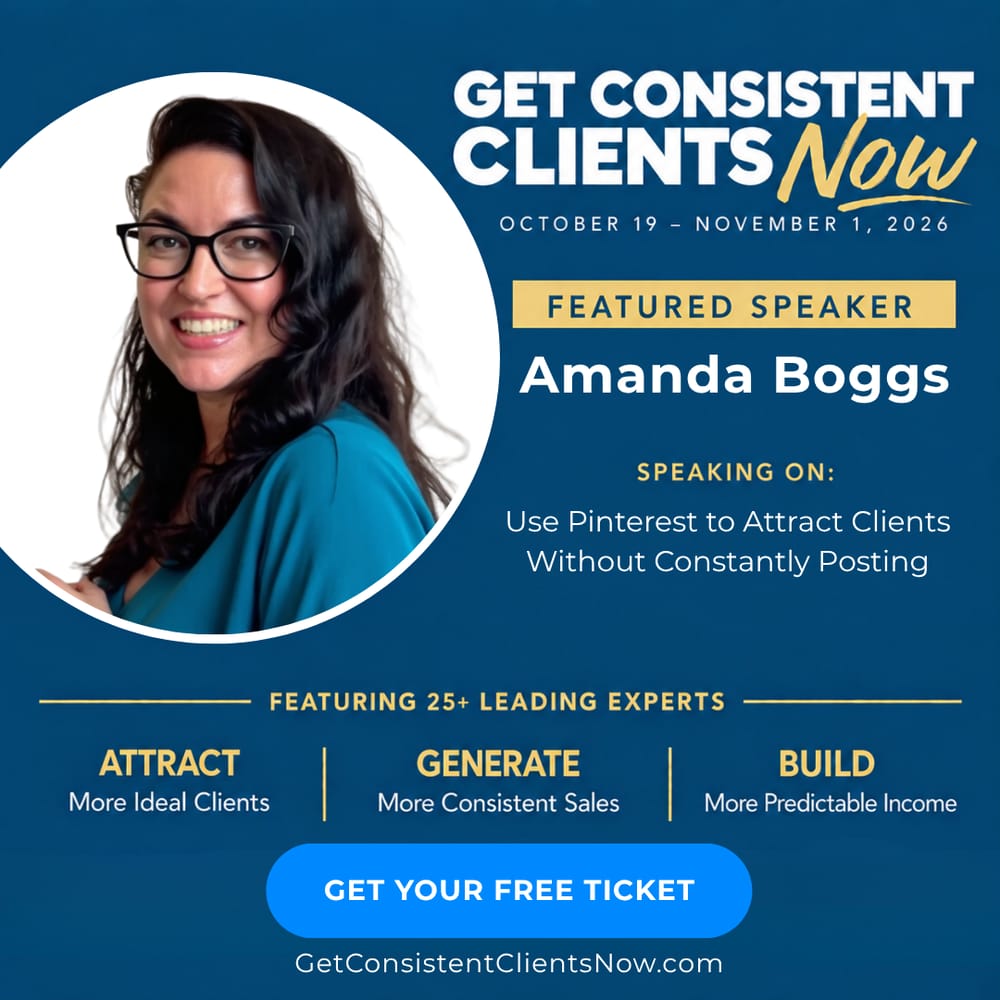
Stop Posting More. Start Getting Found: Join Me at the Get Consistent Clients Summit!
Saturday, October 10, 2026
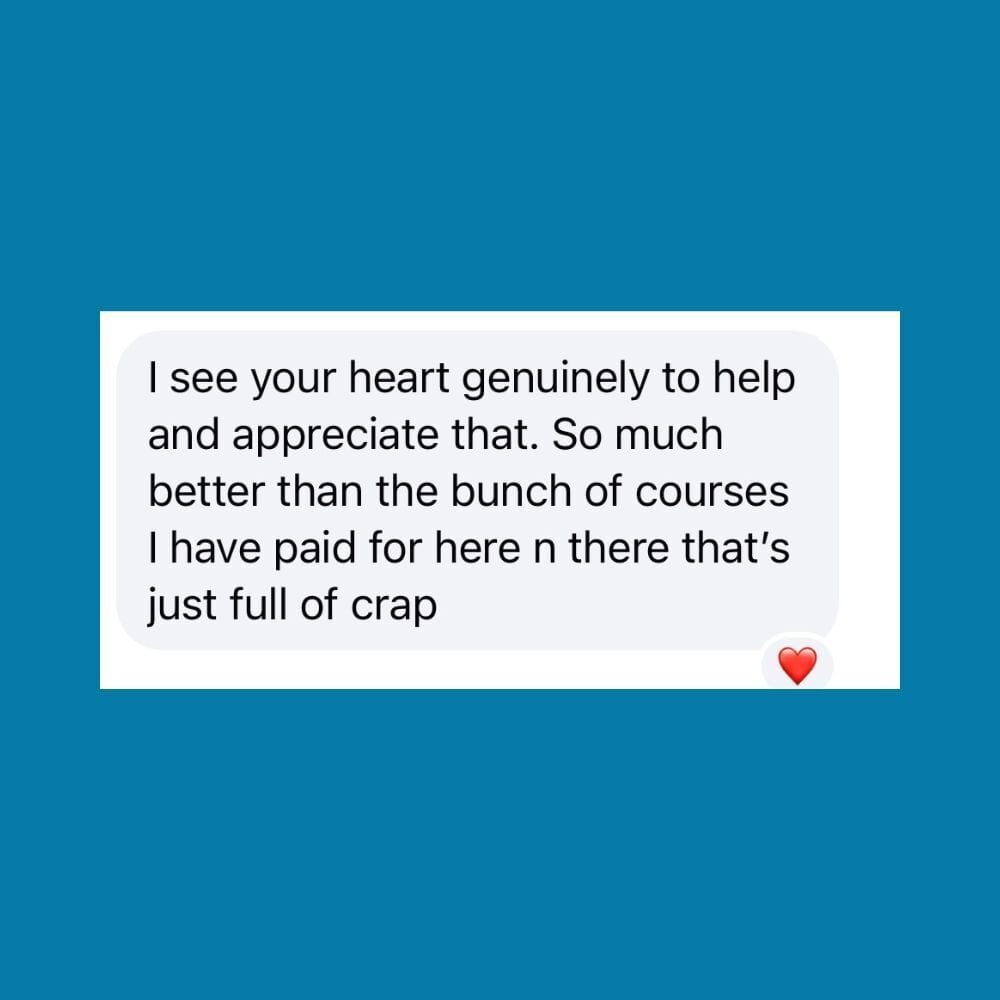
Why One Hour With an Etsy Business Coach Could Save You Months of Trial and Error
Wednesday, October 07, 2026
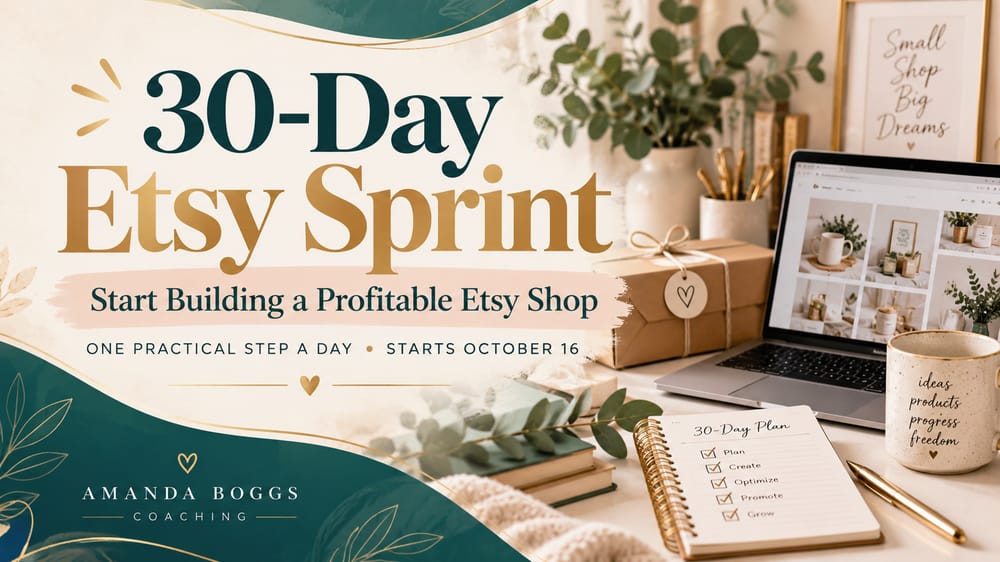
The 30-Day Etsy Sprint Is Coming: Start Building an Etsy Shop That Can Actually Sell
Tuesday, October 06, 2026
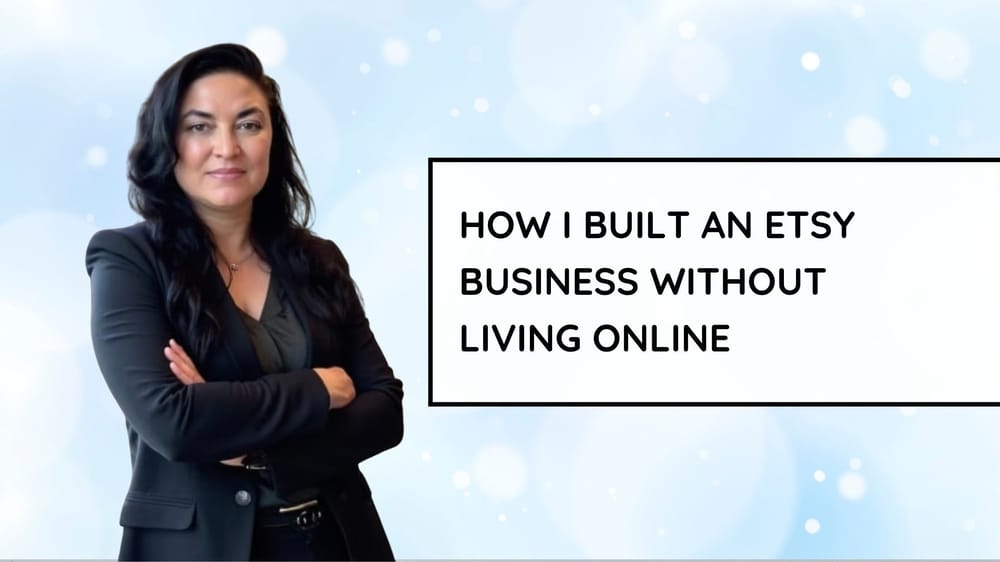
Why I Built a Business That Didn't Require Me to Be Online All Day
©Amanda Boggs 2026 | All Rights Reserved
This page and any offers from Amanda Boggs Coaching are not affiliated with Etsy or Pinterest.