Thursday, October 22, 2026
Your 30-Minute Etsy Business Plan: Product, Buyer, Profit and Sales Path
Create a simple Etsy business plan in about 30 minutes by defining your product, ideal buyer, customer need, costs, pricing, profit potential, discovery strategy, and what happens after the sale. This beginner-friendly plan helps you think like a business owner from the start.
You do not need a 47-page business plan before opening an Etsy shop. But I do want you to know what you're trying to build.
So today we're going to create a simple Etsy business plan. Give yourself about 30 minutes. Open a document, grab a notebook or use the notes app on your phone. Then answer these seven questions:
1. What Am I Selling?
Be specific. Not: “Printables.” Try: “Simple weekly meal-planning printables for busy families.”
Not: “Jewelry.” Try: “Personalized birthstone necklaces for mothers and grandmothers.”
Not: “Templates.”Try: “Editable Instagram templates for new real estate agents.”
The more clearly you understand the product, the easier the next questions become.
2. Who Is Buying It?
Picture a real person. What are they trying to accomplish? What matters to them? What are they frustrated by? What would make them choose this product? If you are teaching something you learned, picture yourself before you went through that process and remember your thoughts and problems at the time.
Your product does not need to appeal to everyone. In fact, trying to sell to everyone usually makes your message weaker.
3. Why Would They Buy It?
What problem, desire or need does it address?
Does it: Save time? Help them make money? Teach something? Create a meaningful memory? Make their home more beautiful? Help them feel organized? Make a task easier? Help them give a thoughtful gift?
There needs to be a reason someone exchanges money for it.
4. What Does It Cost Me to Sell?
This is where we start thinking about profit.
If it's physical, consider: Materials. Packaging. Shipping supplies. Production. Etsy fees. And your time.
If it's digital, your per-order costs may be lower, but you may still have: Software. Design costs. Etsy fees. Advertising. Contractors. Subscriptions.
You don't need perfectly precise numbers today.
But get used to asking: What is left after the sale?
Because revenue and profit are not the same thing.
5. What Can I Realistically Charge?
Look at your costs. Look at the value to the buyer. Look at comparable offers.
Then ask: Does this product leave enough room for a healthy business?
If you discover that you would need to sell hundreds of something every month just to make a small amount of money, that's useful information. It doesn't necessarily mean don't sell it. It means you need to understand the business model you're choosing.
6. How Will People Find It?
Do not leave this question blank. Opening an Etsy shop does not automatically create an audience.
People may discover you through: Etsy search. Pinterest. Google. A blog. YouTube. Email. Collaborations. Existing customers.
You do not need to do everything. In fact, I don't want you doing everything.
But we eventually need a simple way for the right people to discover your products.
7. What Happens After Someone Buys?
This is the question almost nobody asks when they start an Etsy shop: What happens after the sale?
Does that person simply disappear forever? Or is there another way you can serve them?
Maybe there is: A complementary product. A larger offer. More education. Another product category. A way to invite them into your broader business in a way that follows Etsy's rules and your email provider's consent requirements.
The first purchase doesn't necessarily have to be the end of the customer relationship. It can be the beginning.
Look at What You Accomplished This Week
During Week 1 of the Etsy Sprint, you have:
Identified skills and knowledge that could become products.
Connected product ideas to real customer problems.
Considered whether physical or digital products fit your life.
Discovered that you don't need to be an artist to sell useful products.
Looked for evidence of demand.
Chosen to test before scaling.
And created a simple, profit-aware business plan.
That's a much stronger foundation than simply opening a shop and hoping it works.
Next Week: We're Building the Shop
During Week 2, we'll begin turning this plan into an Etsy storefront.
We'll talk about your shop name, listings, pricing, keywords, descriptions and the things your store actually needs before you launch. And here's the idea I want you to carry into next week:
Your Etsy shop is not the entire business. It is one piece of the system.
You need something to sell. You need somewhere to sell it. You need a way for buyers to discover it. And eventually you need a way to continue building the relationship.
When those pieces begin working together, you aren't simply opening an Etsy shop. You're building a sales ecosystem.
Want Me to Help You Build It?
That's exactly what we do inside Signature Sales Blueprint.
Instead of piecing together random strategies, you'll build the offer, storefront, marketing and sales path as one connected system designed to work without requiring you to spend your entire life online.
Learn more about Signature Sales Blueprint at AmandaBoggsCoaching.com.
I'll see you tomorrow for Day 8 of the Etsy Sprint.
See other posts like this one:
Wednesday, October 21, 2026
Start Small: Why You Should Test Before You Scale Your Etsy Shop

Sunday, October 18, 2026
Physical or Digital Products? Choose the Model That Fits Your Time and Profit Goals
Saturday, October 17, 2026
What Should You Sell on Etsy? Start With a Problem People Already Want Solved
Friday, October 16, 2026
Can You Start a Successful Etsy Shop If You’ve Never Sold Anything Before?

Thursday, October 15, 2026
Everybody Wants to Be Their Own Boss. But Are You Ready to Be Your Own Employee?
Wednesday, October 14, 2026
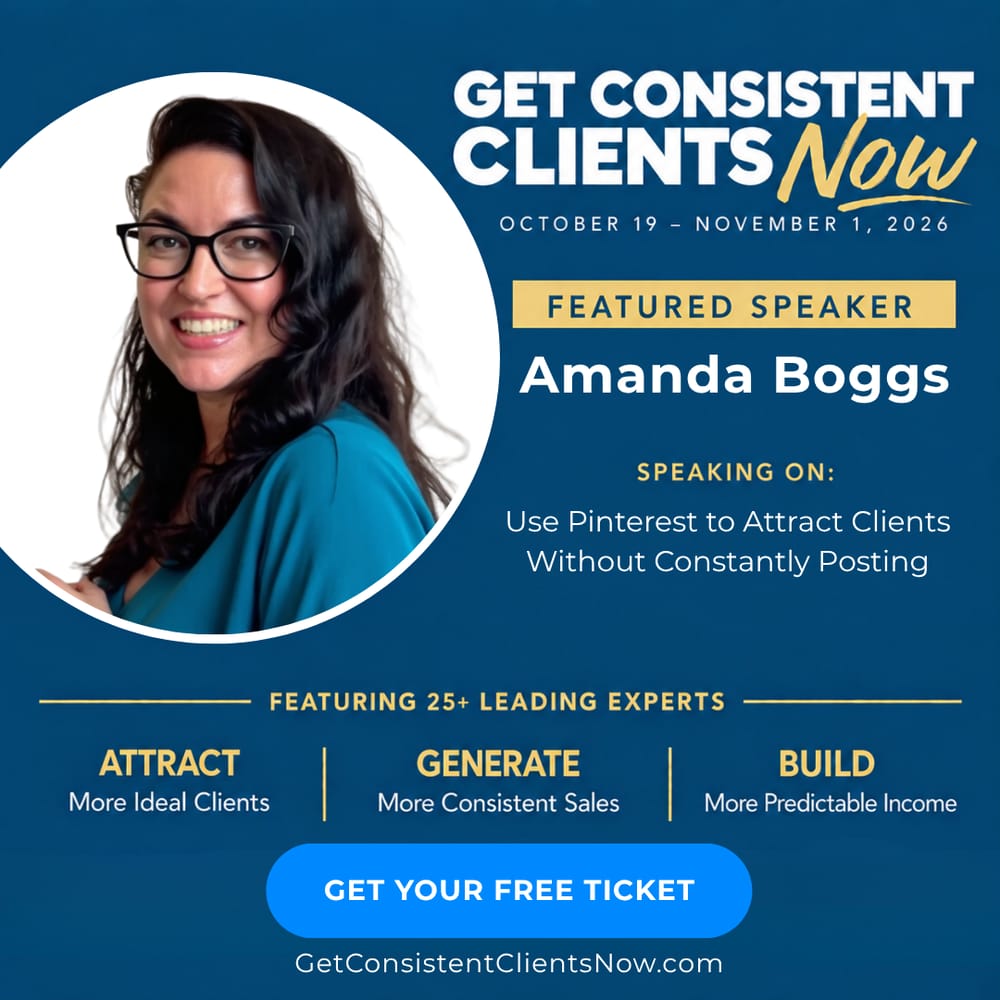
Stop Posting More. Start Getting Found: Join Me at the Get Consistent Clients Summit!
Saturday, October 10, 2026
Why One Hour With an Etsy Business Coach Could Save You Months of Trial and Error
Wednesday, October 07, 2026
The 30-Day Etsy Sprint Is Coming: Start Building an Etsy Shop That Can Actually Sell
Tuesday, October 06, 2026
Why I Built a Business That Didn't Require Me to Be Online All Day
©Amanda Boggs 2026 | All Rights Reserved
This page and any offers from Amanda Boggs Coaching are not affiliated with Etsy or Pinterest.